

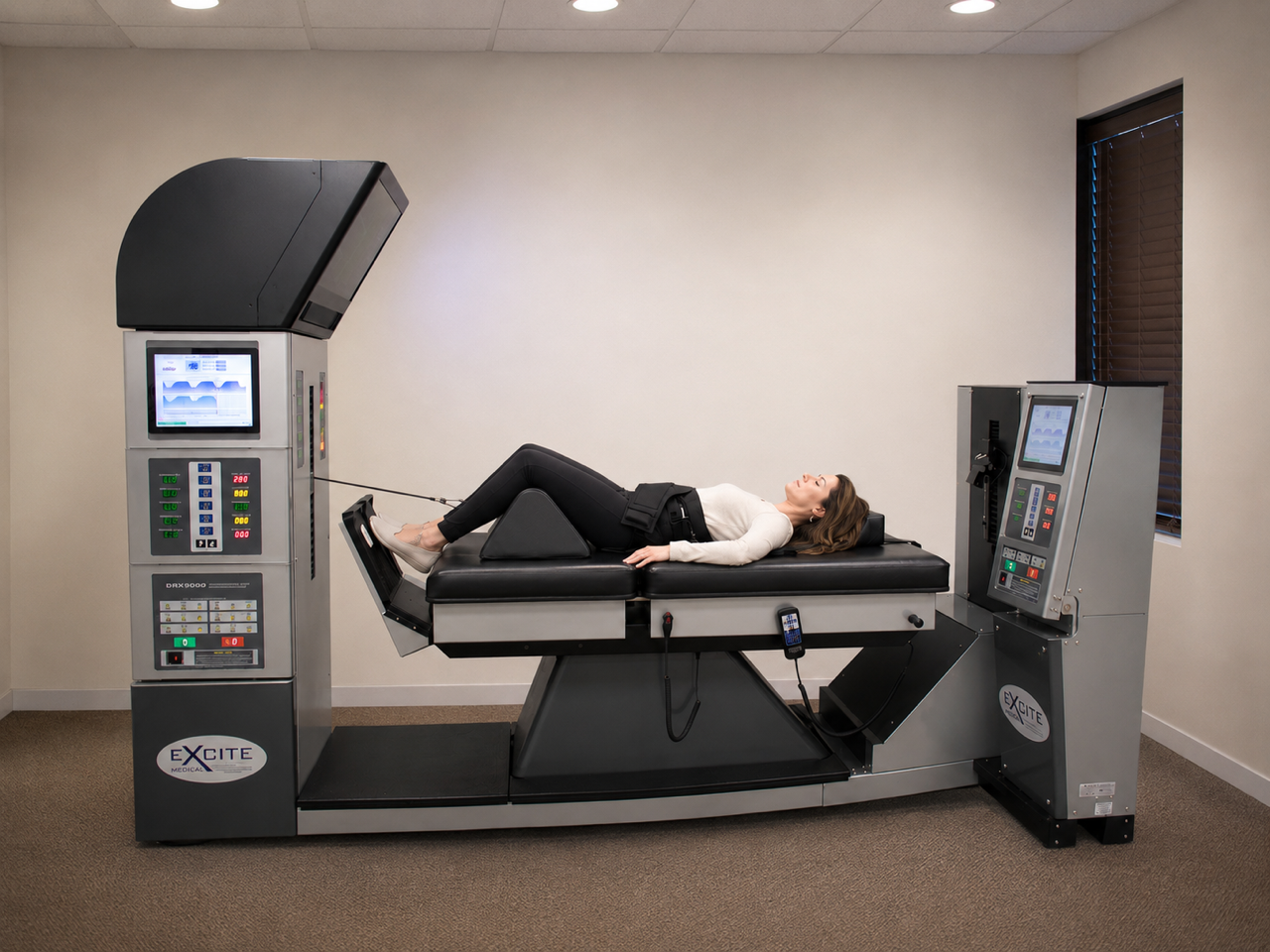
Non-Surgical Spinal Decompression Therapy in Tempe, AZ
What Is Non-Surgical Spinal Decompression Therapy?
Spinal decompression therapy uses gentle, computer-controlled traction to carefully stretch and decompress the spine. This controlled process may help reduce pressure on spinal discs and irritated nerves while promoting improved circulation to the affected area. By creating a more favorable environment for healing, spinal decompression may help relieve pain and discomfort associated with certain disc conditions, including herniated and bulging discs.
Find Relief Without Surgery
Living with back pain, neck pain, sciatica, or a herniated or bulging disc can make everyday activities difficult. At Optimal Health Center in Tempe, we offer non-surgical spinal decompression as a gentle, targeted approach designed to help reduce pressure on the spine and relieve discomfort.
Watch the video to learn how spinal decompression may help you get back to doing the things you love.
Ready to learn if it's right for you? Contact Optimal Health Center today to schedule a consultation.
How Our Spinal Decompression Therapy Plan Works
Understand Your Pain
We start by listening to you and performing a thorough evaluation to better understand what may be contributing to your pain and limited movement.
Create Your Plan
Your care is tailored to your condition and goals. We combine proven therapies and personalized treatment strategies to help reduce pain, restore mobility, and improve function.

Back to Optimal Health
Our goal isn't simply to help you feel better today. It's to help you move better, function better, and get back to living your life with confidence.

The Benefits of Spinal Decompression Therapy with the DRX9000
At Optimal Health Center in Tempe, AZ, spinal decompression therapy with the DRX9000 offers a non-surgical approach designed to help relieve pressure on the spine and support improved spinal function.
At Optimal Health Center in Tempe, AZ, spinal decompression therapy with the DRX9000 offers a non-surgical approach designed to help relieve pressure on the spine and support improved spinal function.
-
The DRX9000 uses computer-controlled decompression to deliver a customized treatment focused on the specific area of the spine being treated.
-
Spinal decompression is designed to gently unload the spine, which may help reduce pressure on affected discs and surrounding structures.
-
For individuals looking for an alternative to more invasive procedures, spinal decompression provides a non-surgical approach to managing certain types of back and neck pain.
-
By reducing stress on the spine and supporting proper spinal function, decompression therapy may help improve flexibility, movement, and everyday mobility.
-
The DRX9000 is an FDA-cleared medical device used for spinal decompression therapy when appropriately prescribed and administered.
-
Treatment can be adjusted based on your condition, symptoms, comfort level, and individual treatment goals, allowing for a more personalized approach to spinal care.
-
By creating a controlled environment that reduces mechanical stress on the spine, decompression therapy may support the body’s natural healing and recovery processes.
Experience Spinal Decompression serving Tempe & the East Valley
Discover whether spinal decompression may be right for you. Contact Optimal Health Center in Tempe today to schedule a consultation.
Frequently Asked Questions
Still have questions? Take a look at the FAQ or contact our office to schedule an appointment.
-
Spinal decompression may be appropriate for certain patients experiencing symptoms related to:
Herniated discs
Bulging or protruding discs
Degenerative disc disease
Low back pain
Neck pain
Sciatica
Radiating pain into the arms or legs
Certain disc-related nerve irritation
Spinal stiffness and restricted mobility
Because every patient's condition is different, a consultation and examination are important before beginning treatment.
-
During treatment, you remain comfortably positioned while the decompression system applies controlled forces to the targeted area of the spine.
The treatment is designed to gently alternate between decompression and relaxation. This controlled movement may help reduce mechanical stress on the affected disc and surrounding structures.
For patients with certain disc-related conditions, reducing pressure around the affected area may help decrease irritation and improve comfort.
Your treatment may also be combined with other therapies when appropriate, including chiropractic care, therapeutic exercise, rehabilitation, and massage therapy.
-
Sciatica isn't a single condition—it is a symptom that can have several possible causes.
When sciatic symptoms are related to irritation or compression of nerves in the lower back, addressing the underlying spinal problem may help reduce symptoms.
Patients may experience:
Pain traveling from the lower back into the leg
Buttock or hip pain
Numbness or tingling
Burning or shooting pain
Leg discomfort that worsens with sitting or certain movements
If you're experiencing sciatica, our first step is determining what may be causing your symptoms and whether spinal decompression is an appropriate treatment option.
-
The lower lumbar discs, particularly L4-L5 and L5-S1, are common areas associated with disc-related low back and leg symptoms.
If you've been diagnosed with an L4-L5 or L5-S1 bulging or herniated disc, spinal decompression may be a treatment option to discuss with Dr. Garrett.
Rather than treating every patient with the same protocol, we evaluate your individual condition and develop recommendations based on your symptoms and goals.
-
For some patients, non-surgical spinal decompression may be an option to explore before considering surgery. The appropriate treatment depends on the individual's diagnosis and circumstances.
Our goal is to help you understand your options so you can make an informed decision about your care.
-
Many patients are surprised by how gentle and comfortable decompression treatment can feel.
You will be positioned on the decompression table while the system delivers controlled forces to the targeted area of your spine.
Your treatment time and frequency will depend on your individual condition and treatment plan.
Most importantly, there is no one-size-fits-all treatment schedule. Your care plan will be based on your examination, symptoms, response to treatment, and goals.